Menu
Accurate pricing is key to running a profitable construction business. This guide shows how to price construction jobs using a simple 4-step system to create reliable estimates and win more work.


Accurately pricing construction jobs is essential for contractors who want to stay profitable and win more work. Without a clear system, it’s easy to underbid, overestimate, or waste time on manual calculations.
In this guide, we’ll walk you through a simple 4-step process to confidently price construction jobs, streamline your estimating, and create professional, reliable estimates every time.
The first step to accurately pricing construction jobs is fully understanding the project scope. This means gathering all the details about the work before you start calculating costs.
Key elements to consider include:
A clear and detailed project scope helps prevent surprises later, ensures you don’t leave out critical costs, and sets a strong foundation for the rest of your estimate. Taking the time here makes the next steps of pricing construction jobs much smoother and more accurate.
Once you have a clear understanding of the project scope, the next step in pricing construction jobs is calculating all material and labour costs. This is where accuracy really matters, as even small errors can eat into your profit margins.
Key areas to focus on:
By carefully calculating material and labour costs, you ensure your estimates are realistic, protect your profit margins, and make the next steps of pricing construction jobs much smoother.
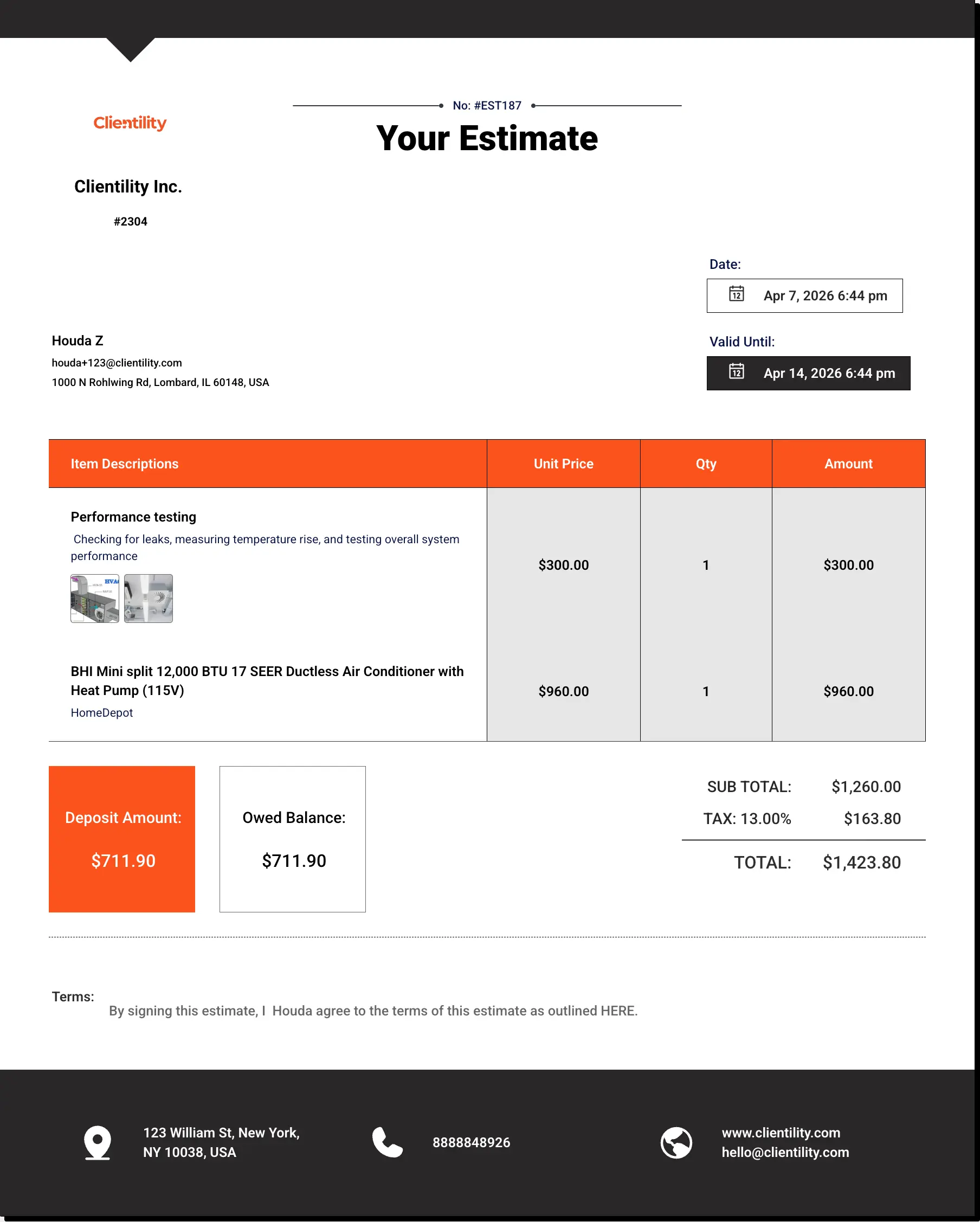
Once you’ve calculated all material and labour costs, the next step in pricing construction jobs is keeping your estimate organized and accurate.
Manually tracking every detail can be time-consuming and prone to mistakes. Using a dedicated estimating tool, such as one like Clientility, can simplify the process, allowing you to manage costs, line items, and totals in one place.
With the right system, you can generate professional estimates quickly, maintain consistency across projects, and even convert estimates into jobs or invoices without extra effort. This makes the entire estimating process faster, more reliable, and ensures your pricing is both professional and precise.
The final step in pricing construction jobs is reviewing your estimate carefully before sending it to the client. Double-check all material, labour, and equipment costs to ensure nothing has been overlooked. Factor in your profit margin and any contingencies for unexpected expenses.
If you’re using a tool like Clientility, you can even preview the estimate to make sure everything looks correct before sending it out.
Make sure the timeline, terms, and conditions are clearly outlined so clients fully understand what’s included. Presenting a polished, professional estimate not only protects your profit but also builds trust with clients and increases your chances of winning the job.
Taking the time to finalize your estimate thoroughly ensures your pricing is accurate, confident, and ready for any project.